
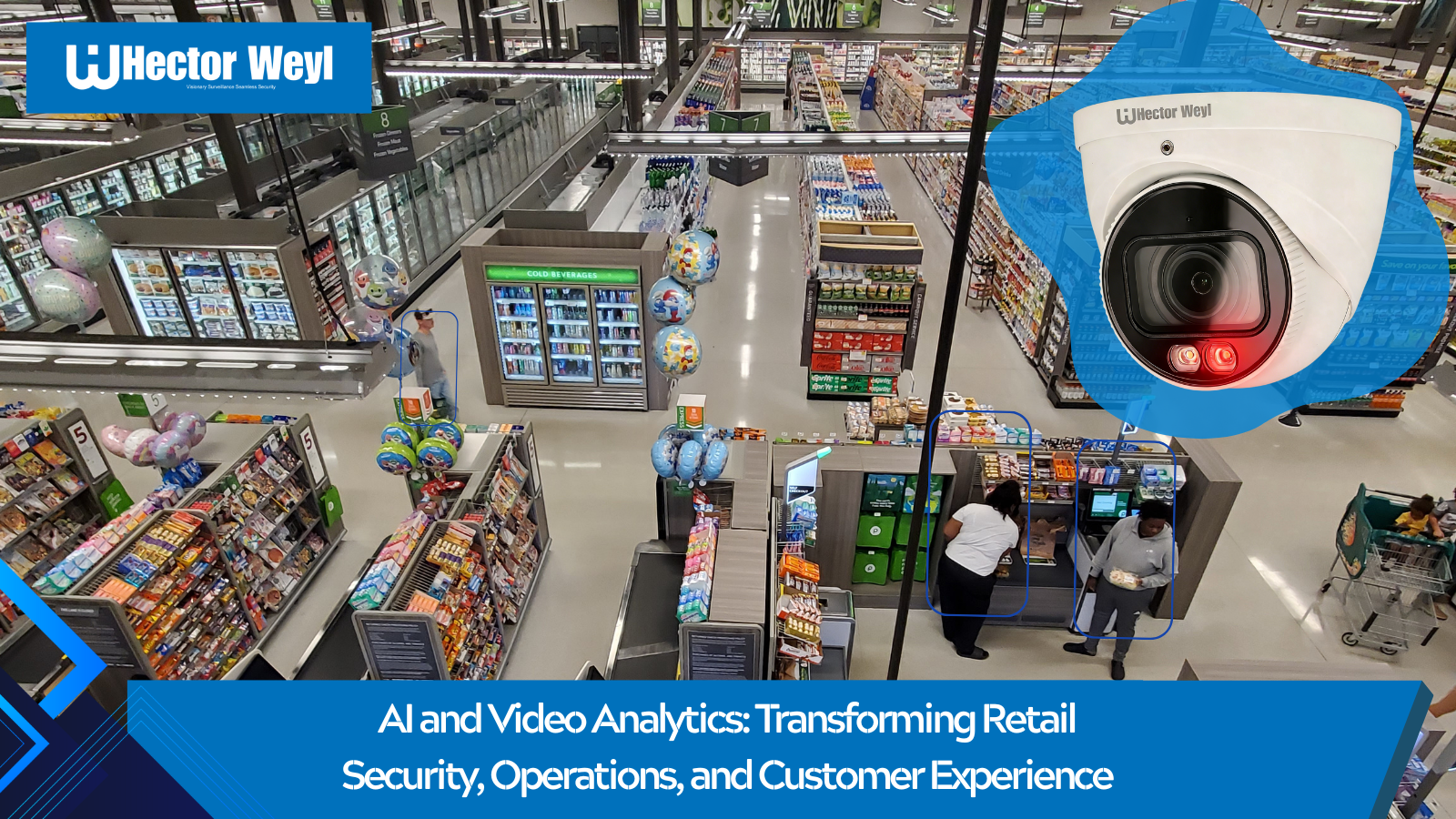
Abstract
Retailers worldwide face persistent challenges—shrinkage, Organized Retail Crime (ORC), staffing shortages, and the pressure to deliver seamless customer experiences. Artificial Intelligence (AI) and Video Analytics have emerged as game-changing solutions, acting as force multipliers to enhance security, streamline operations, and drive revenue growth. By automating real-time alerts, accelerating post-incident investigations, and enabling intelligent evidence sharing with law enforcement, AI addresses critical security pain points. Meanwhile, Intelligent Automation (IA)—the integration of AI with user-centric design, data integration, and human oversight—optimizes core retail operations, from customer flow management and inventory replenishment to queue detection. The successful adoption of these technologies hinges on three pillars: uncompromising privacy and data protection, transparent and unbiased algorithms, human-in-the-loop decision-making, and open architecture platforms that adapt to evolving innovations. This article explores how AI and IA are reshaping retail’s security and operational landscape, delivering actionable insights for retailers seeking resilience and competitive advantage.
1. Introduction
1.1 The Evolving Retail Landscape: Pressures and Opportunities
The retail industry operates in an era of unprecedented complexity. Shrinkage—encompassing theft, administrative errors, and supply chain inefficiencies—costs retailers over $100 billion annually globally, with ORC emerging as a particularly destructive threat due to its coordinated, large-scale nature. Compounding these issues, staffing shortages have left retailers struggling to maintain consistent security coverage, operational efficiency, and customer service standards.
In response, forward-thinking retailers are moving beyond reactive measures to embrace proactive, technology-driven strategies. A 2025 Genetec Physical Security Status Report revealed that 78% of retailers now leverage AI to trigger event alerts, with core objectives including faster emergency response, automated repetitive tasks, and filtered event assessment. AI and IA are not mere technical add-ons—they are strategic enablers that empower retailers to “do more with less,” aligning security, operations, and customer experience goals to drive sustainable growth.
1.2 Clarifying Key Concepts: AI vs. IA
To navigate the technology landscape effectively, it is critical to distinguish between two interconnected frameworks:
- Artificial Intelligence (AI): A broad term encompassing technologies that enable machines to learn from data, adapt to dynamic scenarios, and perform tasks without explicit programming. This includes machine learning, natural language processing (NLP), and computer vision—all foundational to modern retail solutions.
- Intelligent Automation (IA): A holistic approach that combines AI with intuitive user experiences, robust data integration, and predefined rules—all while centering human judgment. IA focuses on outcomes, transforming raw AI capabilities into actionable, user-friendly tools that solve real-world retail challenges, from loss prevention (LP) workflows to customer journey optimization.
The distinction is pivotal: AI provides the technical backbone, while IA translates that backbone into tangible value—whether streamlining LP investigations or enhancing store operations.

2. AI-Powered Retail Security: Strengthening Loss Prevention and Investigations
Retail security teams are tasked with protecting assets, staff, and customers while managing vast volumes of video data and responding to incidents in real time. AI addresses these challenges by reducing friction, accelerating resolutions, and facilitating collaboration.
2.1 Automating Alerts to Reduce Friction
Retail cameras generate hundreds of hours of footage per store weekly, creating an overwhelming data burden for LP teams. AI-driven systems cut through this noise by:
- Filtering False Alerts: Advanced computer vision algorithms distinguish between genuine threats (e.g., suspicious loitering near high-value merchandise, repeated entry-exit patterns) and benign activities (e.g., a customer browsing, staff restocking), reducing false alarms by up to 90% and freeing teams to focus on critical tasks.
- Triggering Targeted, Real-Time Alerts: Customizable rules (e.g., “alert on groups lingering in electronics aisles after hours” or “detect unauthorized access to stockrooms”) notify operators of high-risk events instantly, enabling proactive intervention before incidents escalate.
- Minimizing Monitoring Fatigue: By automating surveillance of non-critical areas, AI allows LP teams to prioritize high-risk zones (e.g., checkout lanes, luxury product sections) rather than monitoring dozens of cameras simultaneously.
A national electronics retailer deployed AI-enabled video analytics to monitor its smartphone and laptop sections, reducing theft by 35% within six months by enabling timely, non-confrontational interventions.
2.2 Accelerating Post-Incident Investigations
Manual video searches for specific events (e.g., identifying a shoplifter or verifying a customer complaint) can take hours or days, delaying resolutions and straining resources. AI transforms this process through:
- Natural Language Forensic Search: NLP-powered tools allow operators to locate footage using simple prompts (e.g., “person wearing a red jacket in aisle 5 between 2–3 PM” or “red vehicle near the loading dock”). This reduces search time from hours to minutes, enabling faster follow-up.
- Digital Evidence Management: Integrated Digital Evidence Management Systems (DEMS) streamline evidence preservation, organization, and sharing. LP teams can securely compile clips, add metadata (e.g., time, location, incident type), and share files with law enforcement digitally—eliminating the inefficiencies of physical media (e.g., USB drives) and accelerating case resolution.
A major grocery chain leveraged this capability to investigate a series of ORC incidents involving stolen high-value meat products. Using natural language search, the LP team identified the suspects’ vehicle and modus operandi in 15 minutes, leading to an arrest within 48 hours—compared to an average 5-day investigation timeline before AI adoption.
2.3 Enhancing Law Enforcement Collaboration
ORC often crosses jurisdictional boundaries, requiring seamless collaboration between retailers and law enforcement. AI-enabled systems facilitate this by:
- Standardizing Evidence: DEMS ensures evidence is formatted to meet legal requirements (e.g., time-stamped, unaltered), reducing the risk of evidence being dismissed in court.
- Enabling Real-Time Sharing: Cloud-based platforms allow retailers to share evidence with law enforcement instantly, even for ongoing incidents, improving the likelihood of apprehending suspects.
In a 2024 case involving a multi-state ORC ring targeting luxury retailers, AI-powered evidence sharing enabled retailers across three states to collaborate with the FBI, leading to the recovery of $2.1 million in stolen merchandise and 12 arrests.
3. Beyond Security: IA-Driven Operational Excellence and Customer Experience
AI and IA are not limited to security—they deliver actionable insights that optimize core retail operations, enhance customer satisfaction, and drive revenue growth. By integrating video analytics with other data sources (e.g., POS systems, inventory management tools), retailers gain a holistic view of their business.
3.1 Optimizing Customer Flow
Understanding how customers move through stores is critical for staffing, layout design, and resource allocation. IA-powered video analytics enable retailers to:
- Track Traffic Patterns: Machine learning algorithms analyze foot traffic data to identify peak hours, busy days, and high-traffic zones. This allows retailers to reallocate staff to high-demand areas (e.g., assigning more cashiers during weekend rushes or sales associates to popular product sections).
- Benchmark Performance: By establishing data-driven baselines for customer wait times and store occupancy, retailers can set realistic targets and measure improvements.
A global coffee chain used these insights to redesign its store layouts, relocating self-service stations (e.g., napkins, sugar) to reduce congestion near order pickup areas. This adjustment cut customer wait times by 20% and increased average transaction value by 8% as customers spent less time navigating crowds.
3.2 Boosting Sales Through Data-Driven Merchandising and Marketing
IA turns video data into a powerful tool for sales and marketing teams by:
- Measuring Display Effectiveness: People-counting and conversion analytics track how many customers view a display versus how many purchase the product. This helps retailers evaluate the success of merchandising strategies (e.g., endcap displays, seasonal promotions) and refine their approach.
- Evaluating Promotion Impact: By analyzing traffic patterns before, during, and after promotions, retailers can assess which campaigns drive foot traffic and sales. For example, a clothing retailer used video analytics to discover that weekday evening promotions targeting working professionals generated 30% higher sales than weekend events.
- Personalizing Customer Journeys: While maintaining privacy compliance, retailers can use anonymized video data to identify bottlenecks in the customer journey (e.g., confusing signage, hard-to-find products) and make adjustments to improve navigation and engagement.
3.3 Streamlining Inventory and Store Maintenance
Retailers are leveraging IA to address operational inefficiencies that impact customer experience and bottom lines:
- Proactive Replenishment: Video analytics can detect empty shelves or low inventory levels, triggering alerts for staff to restock. This reduces out-of-stock incidents, which cost retailers billions annually in lost sales.
- Targeted Cleaning and Maintenance: AI-powered systems identify messes (e.g., spilled products, collapsed displays) or safety hazards (e.g., cluttered aisles) and notify maintenance teams in real time. A large discount retailer implemented this feature and reduced customer complaints about store cleanliness by 45%.
3.4 Queue Detection and Management
Long checkout lines are a top driver of customer dissatisfaction, leading to abandoned purchases. IA addresses this by:
- Real-Time Queue Alerts: Cameras detect long lines at registers and send alerts to management, who can open additional checkout lanes or deploy mobile checkout options to reduce wait times.
- Expanding Beyond Checkouts: Queue detection can be applied to other high-traffic areas (e.g., customer service desks, fitting rooms) to ensure staff are available to assist, preventing lost sales and improving satisfaction.
A national pharmacy chain used this technology to reduce average checkout wait times from 8 minutes to 3 minutes, resulting in a 12% increase in transaction completion rates.
4. Principles for Successful AI/IA Adoption in Retail
While AI and IA offer significant benefits, their success depends on responsible, strategic implementation. Retailers must balance innovation with ethical considerations, regulatory compliance, and human oversight.
4.1 Prioritize Privacy and Data Protection
Retailers handle sensitive data (e.g., customer footage, staff information), making privacy non-negotiable:
- Compliance with Regulations: Ensure AI systems adhere to global data protection laws (e.g., GDPR, CCPA) by minimizing data collection, anonymizing footage where possible, and securing consent for data use.
- Robust Security Measures: Implement strong authentication, access controls, and encryption to prevent unauthorized access to AI-driven platforms. Only authorized personnel (e.g., LP teams, management) should access sensitive data.
4.2 Demand Transparency and Fairness
AI models must be trustworthy to deliver reliable results:
- Bias Mitigation: Choose vendors that test their AI models for bias (e.g., against gender, race, or age) to ensure fair outcomes. For example, queue detection systems should accurately count all customers, regardless of appearance.
- Explainable AI: Seek solutions where results are transparent and interpretable. Operators should understand why an alert was triggered or how a conclusion was reached (e.g., “Alert: Group loitering—based on 15 minutes of continuous presence in the electronics aisle”).
4.3 Keep Humans in the Loop
AI is a tool, not a replacement for human judgment:
- Human Oversight: Critical decisions (e.g., detaining a suspect, sharing evidence with law enforcement) should always be made by trained staff, not machines. AI should provide data to inform decisions, not dictate them.
- Staff Training: Equip teams with the skills to use AI tools effectively. This includes training LP staff to interpret alerts, marketing teams to analyze traffic data, and management to act on operational insights.
4.4 Embrace Open Architecture Platforms
The retail technology landscape evolves rapidly—open architecture platforms offer the flexibility to adapt:
- Interoperability: Choose systems that integrate with existing tools (e.g., POS, inventory management, CRM software) to avoid data silos and maximize ROI.
- Scalability: Open platforms allow retailers to add new AI applications (e.g., facial recognition for employee access, predictive analytics for shrinkage) as their needs change, without replacing entire systems.
5. Conclusion
AI and Intelligent Automation (IA) are reshaping retail security and operations, offering retailers a path to address persistent challenges while unlocking new opportunities for growth. By automating repetitive tasks, accelerating investigations, and delivering data-driven insights, these technologies empower retailers to protect assets, optimize workflows, and enhance the customer experience.
However, success hinges on responsible adoption—prioritizing privacy, transparency, and human oversight, while leveraging open architecture to adapt to future innovations. As retailers continue to navigate a dynamic market, AI and IA will remain critical tools to build resilience, drive efficiency, and create competitive advantage.
The future of retail is not about replacing humans with machines—it’s about empowering humans with machines. By combining AI’s analytical power with human intuition and empathy, retailers can create safer, more efficient, and more customer-centric environments that thrive in an increasingly complex world.





Share:
True Color Technology by Hector Weyl: Elevating AI-ISP Night Vision Capabilities Through Large Language Models
The AI-Driven Revolution in Optical Networking: Powering the Next Era of High-Speed, Energy-Efficient Connectivity