
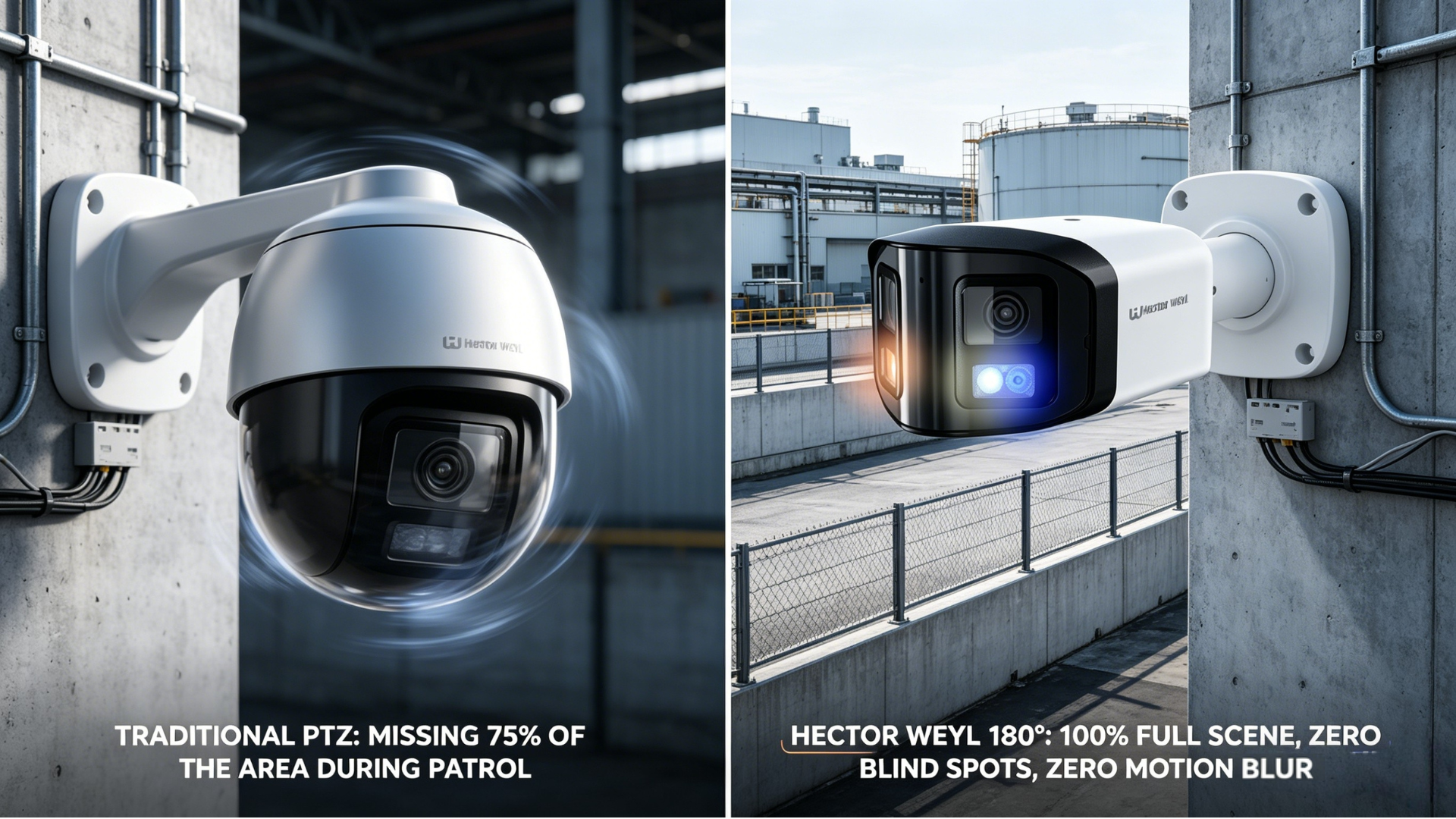
The PTZ Trap: Why Critical Infrastructure is Switching to 180° Seamless Panoramic Vision
In airports, seaports, power substations, railways, and large industrial parks, security is non‑negotiable. There is no “second chance” to prevent breaches, no room for blind spots, and no tolerance for delayed response. Every second of lost visibility can lead to costly downtime, safety hazards, or serious security incidents. For decades, PTZ (Pan‑Tilt‑Zoom) cameras have been widely deployed to cover large perimeters and open areas. Yet today, their inherent limitations are turning into critical vulnerabilities. Modern threats demand constant, complete, and reliable oversight—and that is why 180° seamless panoramic vision is rapidly replacing traditional PTZ as the new standard for critical infrastructure protection.
The Fatal Flaws of Traditional PTZ Cameras
PTZ cameras excel at zooming into distant details, but they suffer from two fundamental weaknesses that make them unsuitable for today’s high‑stakes security environments.
First, PTZ cameras create unavoidable blind spots. A PTZ camera can only point in one direction at a time. Even with automated patrol modes, it cannot monitor multiple zones simultaneously. When the camera is focused on Area A, Area B, C, and D are completely unmonitored. In critical infrastructure, intrusions, accidents, or equipment failures rarely wait for the camera to turn. Criminals and risks exploit these blind spots—and by the time the camera pans over, the damage is already done.
The PTZ Trap: Why Critical Infrastructure is Switching to 180° Seamless Panoramic Vision
In airports, seaports, power substations, railways, and large industrial parks, security is non‑negotiable. There is no “second chance” to prevent breaches, no room for blind spots, and no tolerance for delayed response. Every second of lost visibility can lead to costly downtime, safety hazards, or serious security incidents. For decades, PTZ (Pan‑Tilt‑Zoom) cameras have been widely deployed to cover large perimeters and open areas. Yet today, their inherent limitations are turning into critical vulnerabilities. Modern threats demand constant, complete, and reliable oversight—and that is why 180° seamless panoramic vision is rapidly replacing traditional PTZ as the new standard for critical infrastructure protection.
The Fatal Flaws of Traditional PTZ Cameras
PTZ cameras excel at zooming into distant details, but they suffer from two fundamental weaknesses that make them unsuitable for today’s high‑stakes security environments.
First, PTZ cameras create unavoidable blind spots. A PTZ camera can only point in one direction at a time. Even with automated patrol modes, it cannot monitor multiple zones simultaneously. When the camera is focused on Area A, Area B, C, and D are completely unmonitored. In critical infrastructure, intrusions, accidents, or equipment failures rarely wait for the camera to turn. Criminals and risks exploit these blind spots—and by the time the camera pans over, the damage is already done.
Second, mechanical wear and response delay undermine reliability. PTZ cameras rely on moving motors and gears for pan and tilt functions. Frequent rotation accelerates mechanical fatigue, increasing failure rates and maintenance costs. Even under ideal conditions, rotating to a target area introduces seconds of delay. In emergency situations, those seconds can mean the difference between intervention and disaster. For infrastructure that operates 24/7, this lack of instant responsiveness is simply unacceptable.
180° Seamless Panoramic Vision: Total Coverage, Zero Blind Spots
HECTOR WEYL’s 180° seamless panoramic cameras eliminate these weaknesses through advanced multi‑sensor fusion and precision stitching algorithms. Instead of rotating to “search” for activity, these cameras deliver a single, distortion‑free, ultra‑wide panoramic view of the entire scene at once. This is true “God’s‑eye view” monitoring.
The core advantages are transformative:
- Unmatched situational awareness. Operators see the full perimeter, corridor, yard, or facility in one continuous frame. There are no gaps, no missed movements, and no guesswork about where the threat is coming from.
- Permanent full‑scene recording. Even when users digitally zoom into a specific area for detailed inspection, the camera continues recording the complete 180° panorama in the background. Unlike PTZ, which stops recording other zones during zoom, panoramic cameras preserve full forensic evidence at all times. Unlike traditional systems, we ensure every pixel is usable evidence, even at the edges of the 180° frame.
-
Instant response without delay. There is no need to wait for pan, tilt, or rotation. Every corner of the monitored area is always visible, enabling immediate verification and action.

The PTZ Trap: Why Critical Infrastructure is Switching to 180° Seamless Panoramic Vision
In airports, seaports, power substations, railways, and large industrial parks, security is non‑negotiable. There is no “second chance” to prevent breaches, no room for blind spots, and no tolerance for delayed response. Every second of lost visibility can lead to costly downtime, safety hazards, or serious security incidents. For decades, PTZ (Pan‑Tilt‑Zoom) cameras have been widely deployed to cover large perimeters and open areas. Yet today, their inherent limitations are turning into critical vulnerabilities. Modern threats demand constant, complete, and reliable oversight—and that is why 180° seamless panoramic vision is rapidly replacing traditional PTZ as the new standard for critical infrastructure protection.
The Fatal Flaws of Traditional PTZ Cameras
PTZ cameras excel at zooming into distant details, but they suffer from two fundamental weaknesses that make them unsuitable for today’s high‑stakes security environments.
First, PTZ cameras create unavoidable blind spots. A PTZ camera can only point in one direction at a time. Even with automated patrol modes, it cannot monitor multiple zones simultaneously. When the camera is focused on Area A, Area B, C, and D are completely unmonitored. In critical infrastructure, intrusions, accidents, or equipment failures rarely wait for the camera to turn. Criminals and risks exploit these blind spots—and by the time the camera pans over, the damage is already done.
Second, mechanical wear and response delay undermine reliability. PTZ cameras rely on moving motors and gears for pan and tilt functions. Frequent rotation accelerates mechanical fatigue, increasing failure rates and maintenance costs. Even under ideal conditions, rotating to a target area introduces seconds of delay. In emergency situations, those seconds can mean the difference between intervention and disaster. For infrastructure that operates 24/7, this lack of instant responsiveness is simply unacceptable.
180° Seamless Panoramic Vision: Total Coverage, Zero Blind Spots
HECTOR WEYL’s 180° seamless panoramic cameras eliminate these weaknesses through advanced multi‑sensor fusion and precision stitching algorithms. Instead of rotating to “search” for activity, these cameras deliver a single, distortion‑free, ultra‑wide panoramic view of the entire scene at once. This is true “God’s‑eye view” monitoring.
The core advantages are transformative:
- Unmatched situational awareness. Operators see the full perimeter, corridor, yard, or facility in one continuous frame. There are no gaps, no missed movements, and no guesswork about where the threat is coming from.
- Permanent full‑scene recording. Even when users digitally zoom into a specific area for detailed inspection, the camera continues recording the complete 180° panorama in the background. Unlike PTZ, which stops recording other zones during zoom, panoramic cameras preserve full forensic evidence at all times. Unlike traditional systems, we ensure every pixel is usable evidence, even at the edges of the 180° frame.
- Instant response without delay. There is no need to wait for pan, tilt, or rotation. Every corner of the monitored area is always visible, enabling immediate verification and action.
Lower Total Cost of Ownership (TCO): Better Security, Less Investment
Beyond superior safety, 180° panoramic cameras deliver strong economic value by reducing total cost of ownership.
- Fewer cameras, wider coverage. One HECTOR WEYL 180° panoramic camera can replace 3 to 4 traditional fixed bullet cameras or PTZ cameras, while delivering more consistent coverage.
- Simplified cabling and installation. Fewer cameras mean fewer mounting brackets, less network cabling, and fewer switch ports. This drastically lowers installation labor and material costs.
- Minimal maintenance. Without moving parts, panoramic cameras experience almost no mechanical wear. They offer longer service life, higher stability, and far fewer maintenance interventions compared to PTZ.
For critical infrastructure operators, this translates to higher security performance at a lower long‑term cost.
Conclusion: From “Searching for Evidence” to “Controlling the Situation”
The future of critical infrastructure security is not about chasing camera views—it is about permanent, complete visibility. Traditional PTZ forces operators to “hunt” for the right angle. 180° seamless panoramic vision keeps the entire scene under constant watch. It shifts security from reactive to proactive, from fragmented to unified, and from vulnerable to resilient. Combined with our AMA 4.0 (Active Management & Alerting) logic, our panoramic cameras don't just watch—they respond.
At HECTOR WEYL, we design panoramic solutions tailored to the unique challenges of industrial and critical infrastructure environments, including weatherproofing, high‑precision low‑light performance, and long‑term reliability.
Call to Action
If you are an integrator, installer, or infrastructure planner, contact HECTOR WEYL today to receive a customized 180° panoramic security assessment for your industrial site, substation, port, or airport. Discover how seamless panoramic vision can eliminate blind spots, reduce costs, and elevate your security to a new level.
Email: sales@hectorweyl.com | WhatsApp: +1 2138492222
Innovative Security and Surveillance Solutions • Seamless Security, Boundless Innovation






Share:
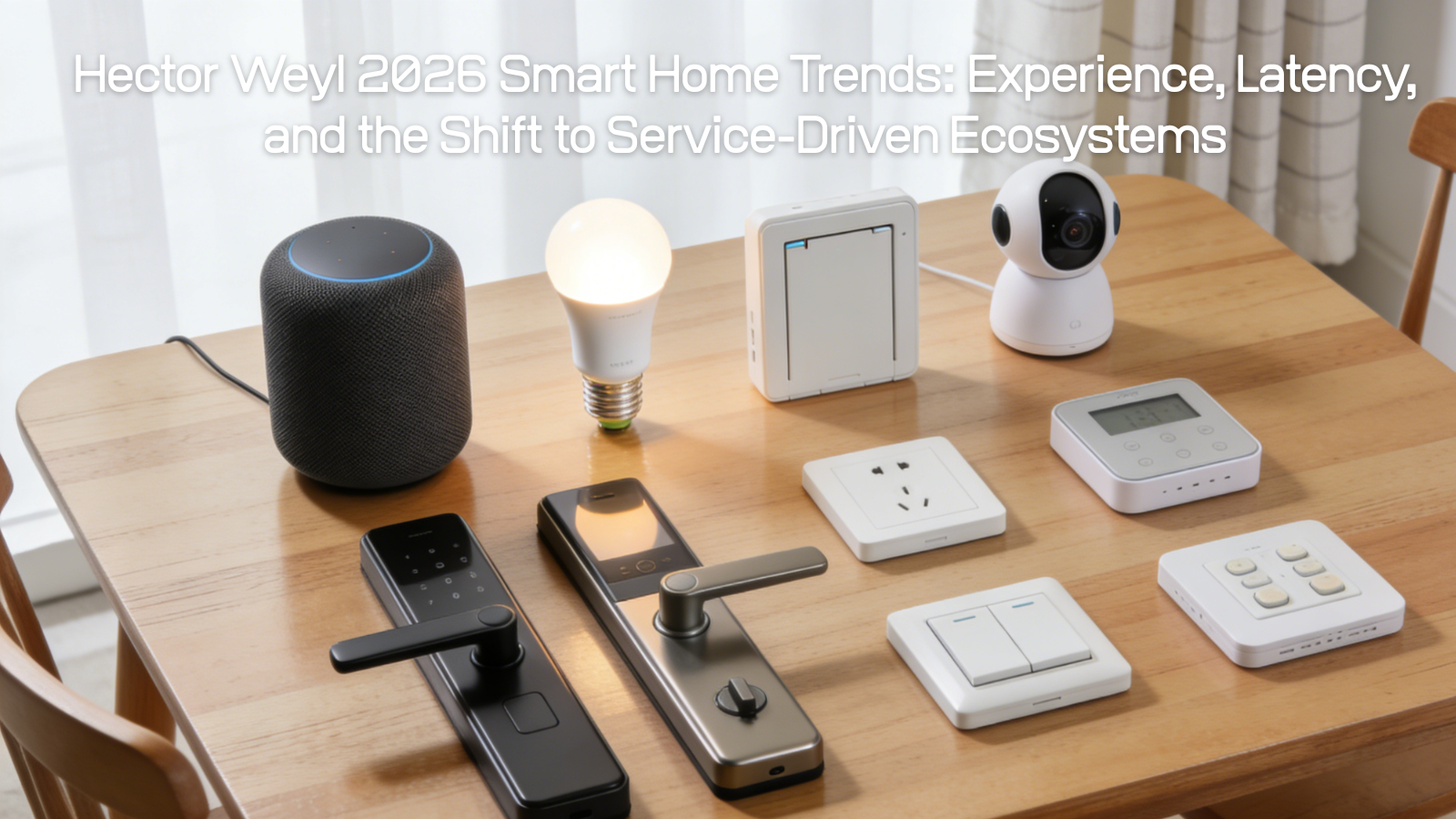
Hector Weyl 2026 Smart Home Trends: Experience, Latency, and the Shift to Service-Driven Ecosystems